
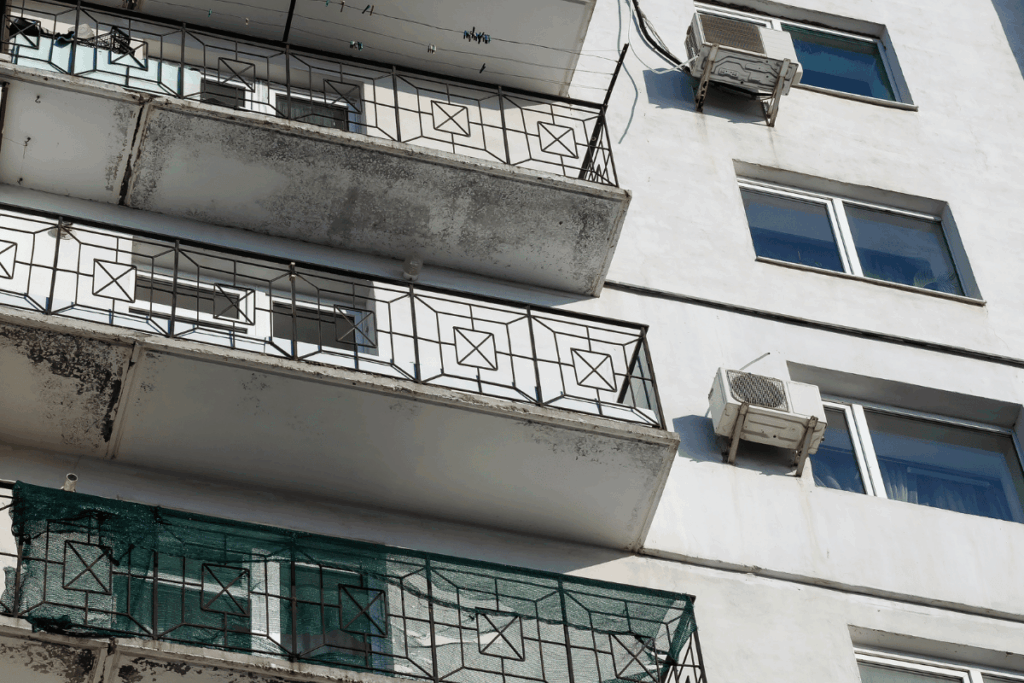
The first 38 degree day of summer is a bad time to find out who is responsible for the aircon. The unit stops cooling, the lease says nothing useful, and the tenant and the property manager each assume the other will make the call.
In Victoria, the rules are clearer than most people think, and they are about to change. This guide covers who has to repair a rental aircon, who pays for what, how renters can access Victorian Energy Upgrades (VEU) discounts, and what the new cooling standard means from 2027.
A quick note on language. Victorian law calls landlords “rental providers” and tenants “renters”. We use both sets of terms below so you can find what you need.
The Short Answer
- If the rental provider supplied the aircon and it breaks through age or normal wear, the rental provider organises and pays for the repair.
- A cooling appliance or service provided by the rental provider that stops working is on Victoria’s list of urgent repairs. So is an essential heating appliance.
- Renters can use the VEU program, but a fixed heating or cooling upgrade needs the landlord’s approval.
- New minimum energy efficiency standards, including a cooling requirement, start phasing in from 1 March 2027.
Does a Landlord Have to Provide Air Conditioning in Victoria?
Heating: yes, already. Under the current minimum standards, a rental home must have a fixed heater in the main living area that is in good working order and energy efficient. A non-ducted air conditioner or heat pump with a 2 star or higher energy rating qualifies, as do 2 star gas space heaters and ducted or hydronic heating with an outlet in the main living area. This is why so many Melbourne landlords choose a reverse cycle air conditioner. One system covers heating and cooling.
Cooling: not generally required yet, but that is changing. The new rental energy efficiency standards start in phases from 1 March 2027. From 1 July 2030, all rental properties must meet the cooling standard unless an exemption applies. In the lead-up, the requirement generally applies at the start of a new rental agreement, or when an existing fixed cooling system fails and cannot be repaired.
To meet the standard, the main living area needs fixed cooling, which means either:
- a non-portable, non-ducted electric air conditioner or heat pump with a 3 star or higher cooling rating for your climate zone, or
- a ducted electric system with a Total Cooling Seasonal Performance Factor (TCSPF) of 3.8 or higher.
A portable unit does not count because the standard requires a fixed system. Exact start dates and exemptions are published by Consumer Affairs Victoria, so check them before making decisions about a specific property.
Who Is Responsible When the Aircon Breaks?
According to Consumer Affairs Victoria, the rental provider must organise and pay for all repairs that are not the renter’s fault. Repairs are either urgent or non-urgent.
Urgent repairs
The urgent list includes a cooling appliance or service provided by the rental provider that is not working, and an essential heating appliance that is not working. A property that does not meet the minimum standards is also on the list. Urgent repairs must be done immediately.
As a renter, contact the rental provider or agent straight away, using the emergency number you were given at the start of the tenancy. Then confirm the request in writing so you can prove you made it.
Non-urgent repairs
Anything not on the urgent list is non-urgent. Put the request in writing, include the date, and keep a copy. The rental provider must complete the repair within 14 days of getting your written request.
What if the rental provider does not respond?
- Urgent repair costing $2,500 or less: After notifying the rental provider and receiving no prompt response, a renter can arrange and pay for the repair themselves. Keep the receipts and give written notice asking for reimbursement within 7 days of the repair. The rental provider then has 7 days to pay you back.
- Urgent repair costing more than $2,500: Renters cannot organise and pay for these. Apply to Rental Dispute Resolution Victoria (RDRV) instead.
- Non-urgent repair ignored for 14 days: Renters can ask Consumer Affairs Victoria for a free repairs inspection, or apply to VCAT.
If you do arrange an urgent repair yourself, use a licensed technician. Air conditioning work involves refrigerant and electrical connections, and unlicensed work can leave you in a worse position than before.
When the renter pays
If the renter caused the damage, the renter may have to cover the repair. The rental provider must give a written repair notice explaining what the damage is and that the renter caused it. Costs must be reasonable, and disputes can go to RDRV. A unit that fails from age or normal wear is not the renter’s fault.
Servicing, Filters and Routine Upkeep
This is where the grey areas appear. Cleaning the filters is usually seen as part of keeping the home clean, so it commonly falls to the renter. Annual servicing, gas top-ups, and internal component faults are different. Many rental providers book a yearly service because a well-maintained system is far less likely to fail on a 40 degree day.
Your lease and your property manager’s policy matter here, so ask in writing if you are unsure. If you are a rental provider, a regular air conditioner service is usually cheaper than an emergency call-out. It also catches problems before they become an urgent repair you owe within hours. If a unit has stopped cooling, our guide to aircon regassing and what it costs in Melbourne explains what to expect.
Repair or Replace?
When a rental provider needs to replace an electric, gas or water appliance, Consumer Affairs Victoria says the replacement must meet minimum efficiency standards. For an old, failing aircon, that usually points to a modern reverse cycle system.
Replacement makes sense when the unit is well past its best, repairs are piling up, or the refrigerant is an older type that is getting harder to source. It also makes sense when the property will soon need to meet the 2027 cooling standard. Our guide on how to read an air conditioner energy rating label shows how to check the star rating before you buy, and our energy-efficient AC installation page covers what we install.
Who Pays for What? Quick Reference
| Situation | Who usually pays | What to know |
|---|---|---|
| Provided aircon fails from age or normal wear | Rental provider | Urgent repair, must be done immediately |
| Non-urgent fault in a provided unit | Rental provider | Written request, 14 days to complete |
| Urgent repair, rental provider unresponsive, $2,500 or less | Renter pays first, then claims back | Keep receipts, give written notice, reimbursement due within 7 days |
| Damage caused by the renter | Renter | Needs a written repair notice, costs must be reasonable |
| Upgrade needed to meet the heating or cooling standard | Rental provider | It is the rental provider's obligation |
| Renter-requested upgrade for extra comfort | Agreed between both parties | Get consent and the cost split in writing |
| Filter cleaning | Usually the renter | Check your lease |
| Running costs (electricity) | Usually the renter | Efficient systems lower the bill |
Can a Renter Install Their Own Air Conditioner?
A split system or ducted unit is fixed to the property, so assume you need the rental provider’s written consent before anything is installed. Whether you need permission depends on the type of change, the type of rental property and the length of your lease. Consumer Affairs Victoria publishes a list of changes renters can make without consent, and a fixed air conditioner is not the sort of thing you should assume is on it.
If the landlord agrees, put the details in writing:
- who pays and how the cost is split
- who owns the unit at the end of the tenancy
- what happens to the unit and the wall or roof penetrations if the renter leaves
For units with an outdoor compressor, it is also worth checking Melbourne outdoor unit noise rules so the placement does not cause neighbour complaints.
VEU Eligibility for Renters
The Victorian Energy Upgrades program is not just for owner-occupiers. The Victorian Government says renters can access VEU upgrades, and private rental properties are eligible for the heating and cooling discount.
The catch is that heating and cooling systems are fixed to the property, so landlord approval is needed. The government recommends that landlords and tenants work together when planning an upgrade.
What the product must meet:
- It must be an approved, high-efficiency reverse cycle air conditioner that provides both heating and cooling.
- It must come with a minimum 5 year warranty for a home.
- If you are replacing an existing system, the old one must be more than 2 years old.
- The discount can only be applied by an accredited provider, and it comes off your invoice upfront.
Discount amounts depend on the system you install and what it replaces, so ask for a quote that shows the discount as a separate line. Be wary of any offer for a “free” air conditioner. The program discounts the price, it does not make installation free.
Why it suits both sides: The landlord improves the property and gets ahead of the 2027 and 2030 standards. The renter gets a more efficient system, and the Victorian Government estimates efficient electric heating and cooling can save renters around $215 a year on energy bills.
A simple process that works:
- The renter or rental provider raises the idea of an upgrade.
- The rental provider gives written consent.
- Choose a VEU accredited provider.
- Get a quote that shows the VEU discount.
- Agree in writing who pays the remaining balance.
- Book the installation.
Kelvinaire is an approved VEU installer. We handle the paperwork, we can quote from photos, and we can send a written quote straight to your property manager. See our VEU rebate page for how the process works.
Tips for Renters and Rental Providers
If you are a renter:
- Report faults in writing, with the date, and keep copies.
- Use the emergency contact for urgent faults, then follow up in writing.
- Do not arrange a repair over $2,500 yourself.
- Ask before you install or modify anything fixed to the property.
If you are a rental provider:
- Check whether your property has an efficient fixed heater now, and plan for the cooling standard.
- Service the unit regularly and keep the records.
- Respond to repair requests quickly. Delays can end up at RDRV or VCAT.
- If the unit is failing, compare repair costs against a VEU-discounted replacement.
Frequently Asked Questions
Is a broken aircon an urgent repair in Victoria?
Yes, if it is a cooling appliance or service provided by the rental provider, it is on the urgent repairs list. The same applies to an essential heating appliance. Contact the rental provider straight away and confirm in writing.
How long does a landlord have to fix an aircon?
Urgent repairs must be made immediately. Non-urgent repairs must be made within 14 days of a written request.
Can my landlord refuse an air conditioner?
A fixed installation generally needs the rental provider’s consent, and cooling is not generally required until the new standard applies. From 1 March 2027, new rules start phasing in, so it is worth raising at lease renewal.
Can I get a VEU discount if I rent?
Yes. Private rentals are eligible, but heating and cooling upgrades need landlord approval, and the product and installer must meet the program rules.
Does a portable air conditioner meet the new cooling standard?
No. The standard requires a fixed, non-portable system in the main living area.
Need Help With a Rental Aircon in Melbourne?
Whether you are a renter chasing a repair or a rental provider planning an upgrade, we can help. Our licensed technicians handle air conditioner service and repairs, including 24/7 emergency air conditioning repair when the heat hits. If a replacement is the better option, we install split systems and ducted air conditioning across Melbourne, and our wider heating and cooling services cover the rest.
Get a free quote in the next 30 minutes through our online booking form, or call us on 0435 466 295.
This article is general information only and is not legal advice. Rental laws and standards change, so check the latest guidance from Consumer Affairs Victoria or contact RDRV or VCAT for your specific situation.

