Buying a new air conditioner can be confusing. Product pages often mention energy efficiency, cooling capacity, heating output, and yearly energy consumption, but they do not always explain what those figures mean.
The air conditioner energy rating label is designed to make comparing systems easier. However, it only helps if you know which numbers and star ratings are relevant to your home.
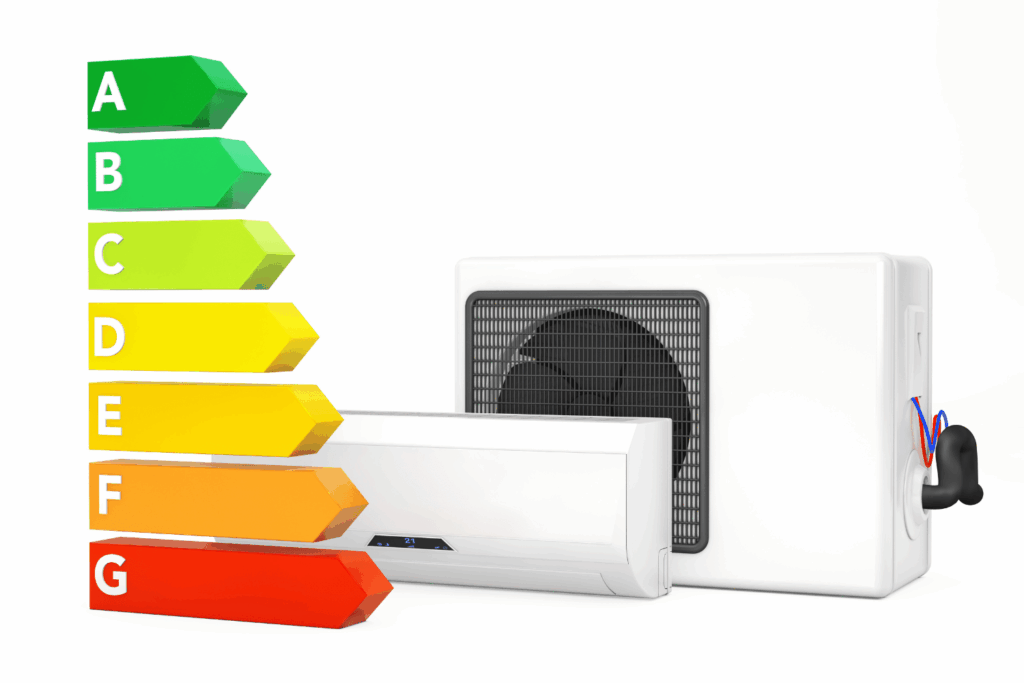
Modern non-ducted air conditioners sold in Australia generally display a Zoned Energy Rating Label, also known as a ZERL. Unlike the older label, it shows how an air conditioner may perform across three Australian climate zones.
This guide explains how to read an air conditioner energy rating label, compare similar systems and make a more informed decision before arranging an air conditioning installation in Melbourne.
What Is the Zoned Energy Rating Label?
The Zoned Energy Rating Label provides information about an air conditioner’s:
- Cooling and heating capacity
- Energy efficiency
- Estimated annual energy consumption
- Performance in different climates
- Indoor and outdoor noise levels
The label separates Australia into three broad climate zones:
- Hot
- Average
- Cold
This is important because the same air conditioner may perform differently depending on the local climate. A system that is highly efficient for cooling in a hot region may have a different heating efficiency rating in a colder area.
The Australian Government’s Zoned Energy Rating Label guide explains that the label provides seasonal efficiency ratings for each climate zone, helping consumers compare systems under conditions more relevant to their location.
1. Start With Your Climate Zone
The first step is to identify the climate zone that applies to your postcode.
Do not simply look for the highest number of stars anywhere on the label. Focus on the column representing your local climate.
Each climate column has separate ratings for:
- Cooling efficiency, shown in blue
- Heating efficiency, shown in red
Melbourne households often rely on air conditioning for both summer cooling and winter heating. For this reason, it is worth checking both ratings rather than concentrating only on the blue cooling stars.
Climate zones are broad categories, so local conditions, the property’s construction and how you use the system can still affect actual energy consumption. You can use the Australian Government’s energy rating label information and calculator to check your location and compare models.
2. Read the Cooling and Heating Capacity
At the top of the label, you will find the system’s output capacity, measured in kilowatts or kW.
This tells you how much heating or cooling the unit can deliver. It does not tell you how much electricity the air conditioner uses.
For example, a model may show:
- Cooling capacity: 5.0 kW
- Heating capacity: 5.8 kW
The heating section may show capacity at two different outdoor temperatures. This helps indicate how the system performs as outdoor temperatures change.
Capacity is one of the most important figures on the label because an air conditioner must be correctly sized for the space.
A system that is too small may:
- Run for longer periods
- Struggle to reach the desired temperature
- Use more energy than expected
- Experience greater wear over time
A system that is too large can also be inefficient. It may switch on and off too frequently, create uneven temperatures and cost more to purchase and operate.
Room size is only one part of air conditioner sizing. Ceiling height, insulation, windows, orientation, shade and the number of occupants should also be considered. Kelvinaire can assess these factors when recommending an energy-efficient air conditioning system.
3. Check the Cooling Star Rating
The blue stars represent cooling efficiency.
A higher number of blue stars generally means the air conditioner uses energy more efficiently when cooling. Star ratings can range from one to ten stars, including half-star increments.
However, star ratings should only be used to compare air conditioners with similar:
- Cooling capacities
- Heating capacities
- System types
- Installation configurations
- Features
A small 2.5 kW bedroom system should not be compared directly with a much larger 7.0 kW unit designed for an open-plan living area.
The larger air conditioner may consume more electricity overall even if both systems have the same star rating. This does not necessarily mean the larger model is less efficient. It simply has more work to do and provides a greater output.
Choose the required capacity first, then compare the star ratings of suitable models.
4. Check the Heating Star Rating
The red stars represent heating efficiency.
This rating is especially important when purchasing a reverse-cycle air conditioner that will be used as a primary source of heating during Melbourne’s cooler months.
An air conditioner can have different ratings for cooling and heating. For example, it may perform very efficiently in cooling mode but have a lower heating rating for your climate zone.
When comparing reverse-cycle systems, check:
- The red star rating for your climate
- The declared heating capacity
- The estimated annual heating energy use
- The unit’s heating performance at lower outdoor temperatures
If you expect to use the unit throughout winter, a stronger heating rating may make a meaningful difference to long-term running costs.
5. Read the Estimated Annual Energy Use
Next to the stars, the label displays estimated annual energy consumption in kilowatt hours, written as kWh.
You will normally see separate figures for:
- Annual cooling energy use in blue
- Annual heating energy use in red
- Each of the three climate zones
A lower kWh figure generally means lower electricity use when comparing air conditioners of a similar type and capacity.
For example, if two correctly sized systems have similar features but one is estimated to consume 450 kWh per year, and the other 550 kWh, the first model is expected to use less electricity under the label’s standard assumptions.
These figures are estimates rather than guaranteed household consumption. Your actual energy use will depend on factors such as:
- How often you run the system
- Your chosen temperature
- Local weather
- Insulation and draughts
- Room size and ceiling height
- Filter and coil condition
- The number of people using the room
- Whether doors and windows remain closed
Even though your actual use may differ, the annual kWh figures provide a useful way to compare similar models under consistent test conditions.
6. Estimate the Air Conditioner’s Running Cost
You can use the annual kWh figure to estimate the system’s yearly electricity cost.
Use this formula:
Estimated annual running cost = annual energy use in kWh × electricity tariff per kWh
For example, imagine the label shows a combined annual cooling and heating consumption of 900 kWh. If your electricity tariff is $0.30 per kWh:
900 kWh × $0.30 = $270 per year
This is a comparison estimate, not a prediction of your exact bill. Electricity plans, usage patterns, and household conditions vary.
Check the usage charge on your latest electricity bill rather than using the total bill amount. The daily supply charge should not be included because you pay that charge whether or not the air conditioner is operating.
7. Look at the Indoor and Outdoor Noise Ratings
The house-shaped section near the bottom of the label shows the unit’s noise levels in decibels, written as dB(A).
Split systems may have separate noise ratings for:
- The indoor unit
- The outdoor unit
A lower decibel rating means quieter operation.
Indoor noise is worth considering when the air conditioner will be installed in a bedroom, study or living area. Outdoor noise is particularly important if the condenser will be positioned near:
- A bedroom window
- An entertaining area
- A neighbouring property
- A narrow side passage
- An apartment balcony
The quietest model may not always be the most efficient, so assess noise alongside capacity, star ratings, installation requirements and energy consumption.
What If an Air Conditioner Does Not Have a Zoned Label?
Not every air conditioning system is required to display the Zoned Energy Rating Label.
Systems that may not carry the mandatory label include:
- Ducted air conditioners
- Multi-head split systems
- Evaporative cooling systems
- Some three-phase systems
- Large-capacity commercial systems
- Certain water-to-air systems
Some manufacturers voluntarily provide energy-performance information for these products. If a label is unavailable, compare the manufacturer’s technical data and seek professional advice.
For whole-home comfort, Kelvinaire can design a ducted air conditioning system based on the property layout, required zones and likely usage. For several individual rooms, a multi-head split system may provide more flexible control.
Common Mistakes When Comparing Energy Labels
Comparing different capacities
A five-star 2.5 kW system and a five-star 7.0 kW system are designed for different spaces. Compare models with similar output capacities.
Choosing the most stars without checking the climate
Use the stars shown for your climate zone, not simply the highest rating displayed on the label.
Looking only at cooling efficiency
If you plan to use reverse-cycle heating, compare the red heating stars and annual heating consumption as well.
Treating the annual kWh figure as a guaranteed bill
The figure is based on standard assumptions. Your temperature settings, operating hours, insulation and electricity tariff will affect the actual cost.
Assuming a higher-capacity unit is always better
Oversizing can increase purchase costs and reduce comfort. The best system is one that is appropriately sized for the property.
Ignoring installation quality
Even an efficient air conditioner may underperform if it is poorly positioned, incorrectly sized, or not installed to the manufacturer’s requirements.
How to Improve Efficiency After Installation
Selecting an efficient air conditioner is only the beginning. How you operate and maintain it also affects energy use.
To help keep running costs under control:
- Use moderate temperature settings
- Close doors and windows while the unit is operating
- Clean accessible filters regularly
- Use zoning where available
- Avoid heating or cooling unoccupied rooms
- Use timers and smart controls
- Arrange routine professional maintenance
- Have unusual noises, weak airflow or leaks inspected promptly
Dust, restricted airflow and worn components can make a system work harder. Kelvinaire provides air conditioner servicing and repairs for split, ducted and other heating and cooling systems across Melbourne.
Choose the Right Air Conditioner for Your Melbourne Property
The Zoned Energy Rating Label is a useful comparison tool, but it should not be the only factor in your decision.
Start by finding the correct capacity for your room or property. Next, check the cooling and heating stars for your climate zone, compare annual kWh figures, and consider noise levels. Finally, factor in installation requirements, controls, maintenance, and how frequently the system will be used.
Kelvinaire Climate Control Solutions can help you compare suitable models and choose an air conditioner that balances comfort, efficiency and long-term value.
For professional advice or a tailored recommendation, contact Kelvinaire on 0435 466 295 or enquire about an air conditioning installation in Melbourne.
Frequently Asked Questions
What does the star rating on an air conditioner mean?
The stars indicate the unit’s energy efficiency compared with similar air conditioners. More stars generally mean greater efficiency, but you should only compare systems with similar capacities, features and configurations.
Is a higher-star air conditioner always cheaper to run?
Not necessarily. A large-capacity system can use more electricity than a smaller unit even if both have the same star rating. Compare the annual kWh figures for similarly sized models.
What is the difference between kW and kWh?
Kilowatts, or kW, show the air conditioner’s heating or cooling output. Kilowatt hours, or kWh, show the estimated amount of electricity consumed over time.
Why are there different ratings for hot, average and cold climates?
Air conditioners perform differently depending on outdoor temperatures and seasonal heating or cooling demands. The climate-specific ratings give consumers a more relevant comparison for their location.
Do ducted air conditioners have energy rating labels?
Ducted air conditioners are not generally required to display the Zoned Energy Rating Label, although manufacturers may provide voluntary efficiency and performance information.
Can servicing improve an air conditioner’s efficiency?
Regular servicing can help maintain airflow, identify worn components and keep the system operating correctly. However, servicing cannot change the original star rating assigned to the model.

