You clean regularly, keep the aircon serviced, and open the windows when the weather allows. Yet the air inside still feels stuffy, the dust returns within a day, or someone keeps sneezing at home but feels fine everywhere else. That is often the moment to consider IAQ testing, short for indoor air quality testing.
We can see dirt on a benchtop, but we cannot see what is circulating through the air we breathe. IAQ testing takes the guesswork out by measuring what is actually happening inside your home or workplace. In this guide, we explain what an indoor air quality assessment involves, the warning signs to look for, and when it makes sense for a Melbourne home or office to book one.
What Is IAQ Testing?
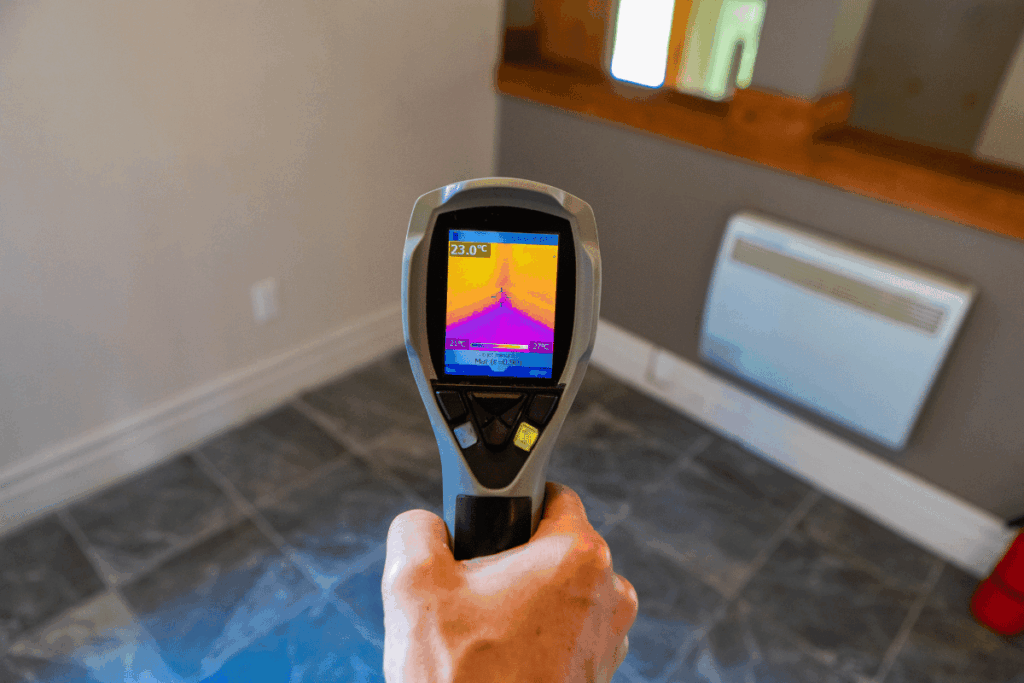
Indoor air quality testing is a professional assessment of the air inside a building. Rather than guessing at the cause of odours, allergy flare-ups or stale rooms, a technician uses monitoring equipment to check the factors that shape how healthy and comfortable your air is. A typical assessment looks at:
- Airborne particles such as dust and allergens
- Mould and other microbial contaminants
- Ventilation performance and how well fresh air is moving through the space
- Your HVAC system and how it affects the air you breathe
- Odours and stale air build-up
The goal is not to hand you a scary report. It is to give you clear information so you can fix the right problem instead of buying products and hoping for the best. You can see exactly what we offer on our IAQ testing service.
Why Indoor Air Quality Matters in Melbourne
Australians spend most of their time indoors, and the air inside our homes and workplaces is shaped by far more than the weather outside. The Australian Centre for Disease Control lists a wide range of contributors, including particulate matter, volatile organic compounds from building materials and furnishings, moulds and other microorganisms, dust mites, pet dander, and gases from gas heaters and cooktops. It also points out that indoor air can carry much higher concentrations of some pollutants than outdoor air.
Melbourne homes and offices face a few extra challenges:
- Tightly sealed buildings. Newer and renovated properties are built to hold temperature, which is great for energy bills but can trap pollutants when ventilation is poor. The Australian CDC reminds householders to keep enough ventilation even when sealing draughts to save on heating and cooling costs.
- A long heating season. When the windows stay shut for weeks, and the heater runs daily, stale air and combustion by-products can build up. The Australian CDC notes that using wood or gas heaters without enough ventilation can lead to carbon monoxide poisoning, which is one more reason to keep your gas ducted heating serviced.
- Damp and humidity. Leaks, condensation and poorly ventilated bathrooms and laundries create the conditions mould loves. Our guide to preventing mould and condensation around your air conditioner covers the basics.
- Smoke from outside. Bushfire smoke and other outdoor pollution can find its way indoors.
The health effects are real. The Australian CDC lists asthma from dust mite allergens and respiratory and cardiovascular impacts from particulate matter among the health impacts of poor indoor air quality. It also says high carbon dioxide and particulate levels can reduce workplace productivity.
7 Signs It Is Time to Book an IAQ Test
- Musty or stale smells that never quite go away, even after a thorough clean.
- Visible mould, damp patches or persistent condensation on walls, ceilings or windows.
- Allergy or asthma symptoms that seem to ease when you leave the building.
- Dust that returns quickly after cleaning, or dust collecting around vents.
- Headaches, tiredness or a foggy feeling among staff or family members that seems tied to a particular space.
- An air conditioning or ducted system that has not been cleaned or serviced in years.
- Recent water damage, renovations or new flooring, paint or furniture, which can release chemicals into the air.
Symptoms like these can have many causes, so an air test is not a substitute for medical advice. If anyone has trouble breathing or chest pain, call 000.
When Should a Melbourne Home Book an Air Quality Check?
You do not need to wait for a problem. Residential IAQ testing makes sense when:
- Someone in the household has asthma or allergies and you want to understand what is in the air.
- You have had a leak, flood or damp problem, especially if you can smell mould but cannot find it.
- You have just renovated or built, when new materials and tighter sealing can affect air quality.
- You are moving into a new property, particularly an older home or one with an unknown maintenance history.
- You are planning HVAC work, or your ducted system has never been inspected.
- You have pets and the dander, odours or dust seem to be getting on top of you.
When Does an Office or Business Need One?
For workplaces, air quality is about wellbeing, productivity and duty of care. It is worth booking workplace air quality testing when:
- Staff report stuffiness, odours, headaches or repeated complaints about the air
- You have completed a fit-out, added new carpet or partitions, or changed how many people use the space
- Your HVAC system is ageing, has been modified, or has not been serviced on a regular schedule
- You manage a childcare centre, clinic or another facility where vulnerable people spend long hours indoors
- You want documented evidence that ventilation is doing its job
Victorian employers are not left guessing about ventilation. In its office health and safety guidance, WorkSafe Victoria advises employers to assess ventilation risks, keep HVAC systems regularly maintained (including changing filters), and consider engaging a suitably qualified person such as an occupational hygienist or ventilation engineer where needed. A commercial IAQ assessment gives you a practical starting point. Pairing it with a proper maintenance plan helps too, and our guide to commercial HVAC maintenance schedules explains how.
What Does an IAQ Test Involve?
Every building is different, so each assessment is tailored to your property type, HVAC system and specific concerns. A typical process looks like this:
- A conversation about your concerns. We ask what you have noticed, such as smells, symptoms, problem rooms and recent building work.
- An inspection of the space and your systems. We look at ventilation, air conditioning and ducted systems, filters, vents and signs of moisture.
- Measurements with professional monitoring equipment. This is where we gather real data on the factors that affect your air, rather than relying on assumptions.
- Analysis of the results. We work out what is causing the issue, whether that is poor airflow, a dirty duct system, moisture or something else.
- A clear report with practical recommendations. You get honest, actionable advice, not a sales pitch.
What Happens After the Test?
Testing is only the first step. Depending on what we find, the fix might include:
- Air duct cleaning to remove dust and debris that has built up in your ductwork
- HEPA air purifiers to capture fine particles that standard filters miss
- Ventilation system upgrades to bring in fresh air and move stale air out
- Air conditioner servicing and repairs to restore airflow and keep filters and coils clean
- Moisture and mould source fixes so the problem does not simply return
A quick note on purifiers: they are a useful tool, but they treat the symptom rather than the cause. WorkSafe Victoria is clear that HEPA units are not a substitute for ventilation, which is why we look at the whole picture.
How Often Should You Test?
There is no single schedule that suits every property. A better approach is to test when something changes, such as a renovation, water damage, a new HVAC system, or a rise in complaints, and to keep up with routine maintenance in between. The Australian CDC recommends regularly removing dust, cleaning air conditioner filters, and keeping mechanical ventilation systems well maintained. We recommend servicing your heating and cooling system at least once a year.
IAQ Testing FAQs
Can I just buy an air quality monitor instead?
A home monitor can be a handy indicator, but many only track a few readings and cannot tell you why the numbers look the way they do. A professional assessment looks at the building and the HVAC system to find the source.
Will a HEPA air purifier fix my air quality on its own?
It can help capture fine particles, but it will not fix an underlying moisture, ventilation or ductwork problem. Testing first shows you what you are actually dealing with.
Is IAQ testing only for people with health problems?
Not at all. Many people book after a renovation, before moving in, or simply for peace of mind. Businesses often book to check that ventilation is performing properly.
How much does it cost and how long does it take?
That depends on the size and type of the property and what needs to be assessed. Get in touch for a free quote, and we will explain what is involved.
Book Your IAQ Test in Melbourne
If you have noticed stale air, mould, dust or unexplained symptoms, or you manage a workplace and want confidence in your ventilation, professional testing is the clearest first step. Kelvinaire Climate Control Solutions provides indoor air quality testing across Melbourne for homes and businesses, backed by practical solutions from our ventilation and indoor air quality services and commercial HVAC team.
Book Your IAQ Test in Melbourne
If you have noticed stale air, mould, dust or unexplained symptoms, or you manage a workplace and want confidence in your ventilation, professional testing is the clearest first step. Kelvinaire Climate Control Solutions provides indoor air quality testing across Melbourne for homes and businesses, backed by practical solutions from our ventilation and indoor air quality services and commercial HVAC team.

