
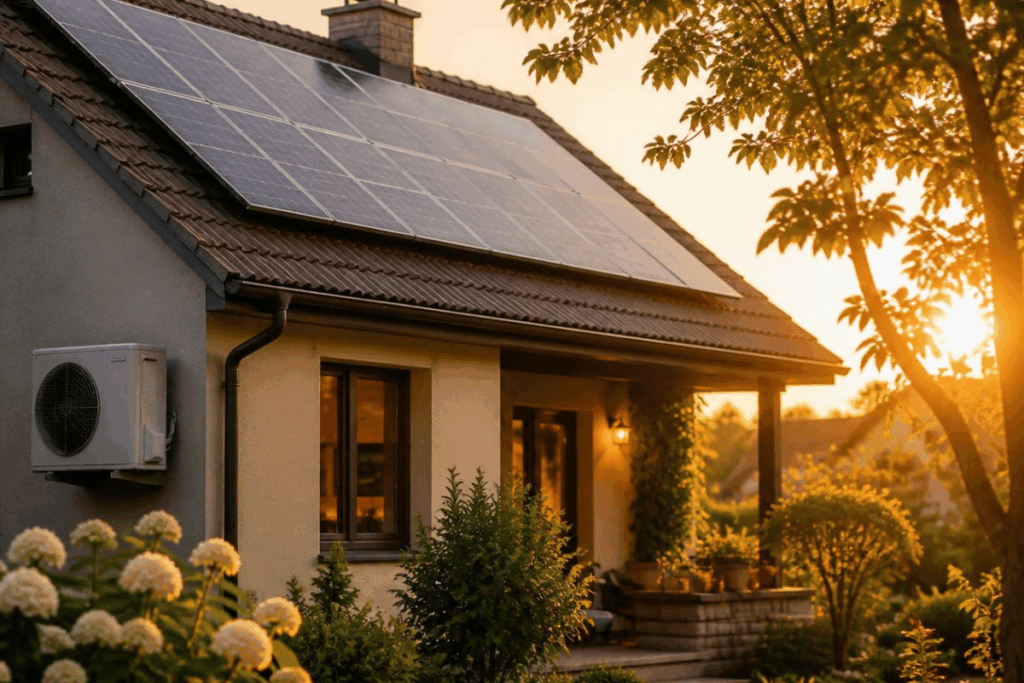
Summer is when your solar panels do their best work. It is also when your air conditioner works hardest. On paper, that looks like a perfect match. In practice, the timing does not always line up.
Solar output typically peaks around the middle of the day. Your home, however, keeps absorbing heat through the afternoon, and many households switch the air conditioner on at 5pm, just as the panels are winding down and, on many time-of-use plans, electricity costs the most.
That timing gap matters more in Victoria than it used to. The regulated minimum feed-in tariff ended on 1 July 2025, so retailers now set their own export rates, and they cannot pay less than zero. Many plans pay only a few cents for each kilowatt hour (kWh) you send back to the grid, while buying electricity from the grid costs several times more. In other words, the solar power you use yourself is usually worth far more than the solar power you export.
This guide explains how to get the most out of solar panels and air conditioning working together. It covers when to run your system, how to pre-cool, how to reduce the load, and how the new Victorian Midday Power Saver fits in. It focuses on the air conditioning side of the equation, so you can make better use of the power your roof already produces.
What Is Solar Self-Consumption?
Self-consumption is the share of the electricity your solar panels generate that you use in your own home, rather than export to the grid. Solar Victoria explains that households with rooftop solar benefit most when they maximise self-consumption during the day, while the system is generating.
Here is a simple, illustrative example. Assume your plan charges 30 cents per kWh for usage and pays 5 cents per kWh for exports:
- Use 1 kWh of your own solar to run the air conditioner: you avoid buying 30 cents of grid electricity.
- Export that same 1 kWh: you earn 5 cents.
These figures are examples only. Check the usage rate and feed-in tariff on your latest bill or plan, as they vary between retailers.
Air conditioning suits self-consumption because it can use a lot of power, and unlike many appliances, you have real control over when it does most of its work.
Why Summer Cooling and Solar Do (and Do Not) Line Up
What works in your favour:
- The hottest days are usually the sunniest, so solar generation is high when cooling demand is high.
- Panels generate strongly for several hours around midday, giving you a large window to cool the home.
- Modern inverter air conditioners ramp up and down smoothly, which makes their power use easier for solar to cover.
Where the mismatch shows up:
- Heat builds in a home over the day, so the hottest indoor temperatures often arrive in the late afternoon, when panel output is falling.
- Evening and overnight cooling, particularly in bedrooms, relies on grid power unless you have a battery.
- Melbourne’s changeable weather means cloud and cool changes can reduce solar output at short notice.
The goal is not to run the air conditioner on solar all day. It is to move as much cooling as practical into the hours when your panels are producing, and to reduce how much cooling you need later.
8 Ways to Run Your Air Conditioner on More of Your Own Solar
1. Learn When Your Panels Produce
Your solar inverter shows how much your panels are generating, and many systems also have a smartphone app or web portal. Spend a sunny day checking the output every hour or two. Note when generation ramps up in the morning, when it peaks and when it fades.
An in-home display can also show your household usage in real time, so you can see exactly how much power your air conditioner draws when it starts.
2. Pre-Cool Your Home While the Sun Is High
Pre-cooling means running the air conditioner earlier in the day, while your panels are generating, so the home is already comfortable when the hottest part of the afternoon arrives. Solar Victoria suggests that well-insulated homes can use split system timers to pre-cool on summer afternoons, which reduces the cooling needed during the evening peak.
A practical approach:
- Start cooling mid-morning on forecast hot days, rather than waiting until the house is already hot.
- Aim for a comfortable temperature, not the lowest setting. A very low setpoint makes the system work harder for longer.
- Keep windows and external doors closed and draw blinds on sun-exposed windows.
- Once the home is cool, let the system hold a steady, moderate setpoint rather than swinging between extremes.
Pre-cooling works best in a well-insulated, well-sealed home. In a draughty home with little insulation, the cool air escapes as fast as you produce it, so improving the building itself may save more than any timer.
3. Use Timers, Schedules and Smart Controls
You should not need to be home to make the most of your solar. Most modern split systems and ducted systems can be scheduled using a remote timer, wall controller or Wi-Fi app.
Set the system to start before the hottest part of the day and ease off as the sun drops. If you work from home, schedule cooling for your main living area during the solar window. If you are out, use a timer so the house is already cool when you return, instead of the system running flat out from 5pm.
Smart controls make this easier, and Kelvinaire can advise on smart air conditioning installation options that suit your home and your current system.
4. Cool Only the Rooms You Use
Zoning reduces the load, which means your solar can cover a bigger share of it. A multi-head split system lets you control each room separately, while a zoned ducted air conditioning system lets you condition only the areas in use.
During the day, focus on your main living zone. In the late afternoon, cool the bedrooms ahead of bedtime while there is still some solar available, then let them coast into the evening.
5. Reduce the Heat Your Home Has to Fight
The cheapest kilowatt hour is the one you never need. Reducing heat gain means the air conditioner works less, and a smaller load is easier for your panels to cover.
- Use external shading such as awnings, shutters or shade sails, especially on west-facing windows.
- Close blinds and curtains early on sun-exposed windows.
- Seal gaps around doors, windows and vents that let hot air in.
- Check your ceiling insulation.
- Use ceiling fans so you can run the air conditioner at a higher setpoint and still feel comfortable.
Discounts may be available for some of these upgrades through the Victorian Energy Upgrades program, so it is worth checking your eligibility.
6. Choose the Right System Size and Efficiency
An oversized system can cycle on and off and cost more to buy and run, while an undersized system may run flat out and still struggle. A correctly sized, high-efficiency inverter system draws power more smoothly, which suits solar.
Compare star ratings and annual energy figures using our guide on how to read an air conditioner energy rating label, then talk to us about an energy-efficient air conditioning installation matched to your home’s size, insulation, orientation and shading.
7. Stagger Other Big Appliances Around the Air Conditioner
Many dishwashers and washing machines have a delay-start feature, and shifting them into the day helps you use more of your own solar. The same principle applies to pool pumps, EV chargers and hot water heat pumps.
Try not to run everything at once. If your panels cannot cover the total load, the shortfall comes from the grid. If you are replacing an ageing hot water system, a heat pump model can often be set to heat water during the day, which is another way to use midday solar. Ask us about a hot water system changeover.
8. Keep Your Air Conditioner Clean and Serviced
Dirty filters, dusty coils and restricted airflow make a system work harder and use more electricity, which means more solar or grid power is needed to do the same job.
Clean accessible filters regularly, keep the outdoor unit clear of leaves and clutter, and book a professional service before summer. Kelvinaire provides air conditioner servicing and repairs for split, ducted and other systems across Melbourne. If you notice weak airflow, unusual noises or poor cooling, have it checked before the heat arrives.
What About a Solar Battery?
A battery stores surplus solar so you can use it later, for example to help run the air conditioner in the evening. Whether a battery makes sense depends on your usage, solar system size, budget and electricity plan, and it is a decision best made with an accredited solar and battery installer.
For many households, the best first step is simply to shift the air conditioner’s main workload into the solar window, which costs very little to do.
Using the Victorian Midday Power Saver With Your Air Conditioner
From 1 October 2026, eligible Victorian households can opt in to the Victorian Midday Power Saver. Under the program:
- Free electricity is available from 11am to 2pm every day, including weekends.
- The free allowance is up to 24 kWh per day.
- It is optional, available to residential customers with a smart meter, and you sign up through your electricity retailer.
- Electricity prices outside the free window may be slightly higher, so it suits households that can shift their usage.
The Victorian Government lists air conditioners among the appliances worth running during the free window. It also notes that the offer can work well for households with solar panels, a battery, a pool pump or heating, or a well-insulated home, because energy-intensive loads can be moved into the middle of the day. Pre-cooling between 11am and 2pm on a hot day is a natural fit, and it overlaps with the hours your panels are likely to be producing.
Before you sign up, compare the offer with your current plan. Ask your retailer how it affects your feed-in tariff and your rates outside the free window, and use the free Victorian Energy Compare service to check other offers. The Midday Power Saver will not suit every household.
If you plan to run several high-energy appliances at the same time, such as an air conditioner, a battery and an EV charger, spread them across the three-hour window rather than starting everything at once. Homes with older wiring or an older switchboard should speak with a licensed electrician first.
Common Mistakes When Running an Air Conditioner on Solar
Waiting until the house is already hot
Starting at 5pm means the system works hardest when solar output is lowest. Start earlier.
Setting the temperature as low as possible
A very low setpoint does not cool the home faster. It makes the system run harder and longer. Choose a comfortable temperature and let the system hold it.
Running every big appliance at once
If total demand is higher than your solar output, you buy the difference from the grid. Stagger appliances across the middle of the day.
Ignoring the building itself
Poor insulation, unsealed gaps and unshaded west-facing windows can undo the benefit of pre-cooling.
Assuming your plan has not changed
Feed-in tariffs and usage rates change, and Victorian retailers now set their own export rates. Review your plan at least once a year.
Treating estimates as guarantees
Results depend on your system size, panel orientation, shading, weather, insulation and how you use the air conditioner.
Is Your Air Conditioner Ready for Summer?
If your current system is older, struggling, or poorly sized, upgrading to a modern inverter reverse cycle air conditioner can give you efficient cooling in summer and heating in winter from one system. Our guide to the benefits of reverse cycle air conditioning explains how it works.
Eligible households may be able to reduce upfront costs through the Victorian Energy Upgrades program, so see our VEU rebate page for details. If you are planning a new split system installation, booking before the first heatwave is easier than during one, and our guide to the best time of year to install air conditioning in Melbourne explains why.
Get Expert Help Choosing and Setting Up Your System
Kelvinaire Climate Control Solutions helps Melbourne households choose, install and maintain air conditioning that suits how they live. We can recommend a system sized for your home, advise on controls and timers, and service your existing unit so it runs all summer. For questions about solar panel size, inverters or batteries, an accredited solar installer is the right person to speak with.
For advice or a tailored recommendation, call Kelvinaire or contact our team today.
Frequently Asked Questions
Can I run my air conditioner on solar panels alone?
With a typical grid-connected system, your home uses solar power first and draws any shortfall from the grid automatically. Your panels do not need to cover the whole load for you to benefit. Every kilowatt hour of solar that the air conditioner uses is one you do not have to buy.
Will my air conditioner work in a blackout if I have solar panels?
Not usually. Most grid-connected solar systems shut down during a power outage for safety reasons, so the air conditioner will not run unless you have a system specifically designed to provide backup power. A solar installer can advise on this.
How much power does an air conditioner use?
It depends on the size, efficiency and conditions. A typical residential split system draws roughly 0.5 to 2 kW while cooling, and ducted systems can draw more. Check the annual energy figures on the energy rating label to compare models.
Is it better to pre-cool or run the air conditioner all day?
It depends on your home. In a well-insulated home, pre-cooling in the middle of the day while your panels are producing can reduce the cooling needed in the evening. If someone is home all day, a steady, moderate setpoint may suit you better. In a poorly insulated home, improving insulation and sealing gaps usually helps more than changing the schedule.
Does self-consumption still matter if I have a good feed-in tariff?
In most cases, yes. The export rate is usually lower than the rate you pay to buy electricity, so using your solar at home is typically worth more than exporting it. Time-varying plans can pay more at certain times of day, so check the details of your own plan and compare offers using Victorian Energy Compare.
Do smart controls help me use more solar?
Yes. Timers and Wi-Fi controls make it easier to schedule cooling for the hours when your panels are producing, even when you are not at home.
This article provides general information only. Savings depend on your home, solar system, electricity plan and how you use your air conditioner. Check current offers and eligibility with your electricity retailer and the relevant Victorian Government websites.

