
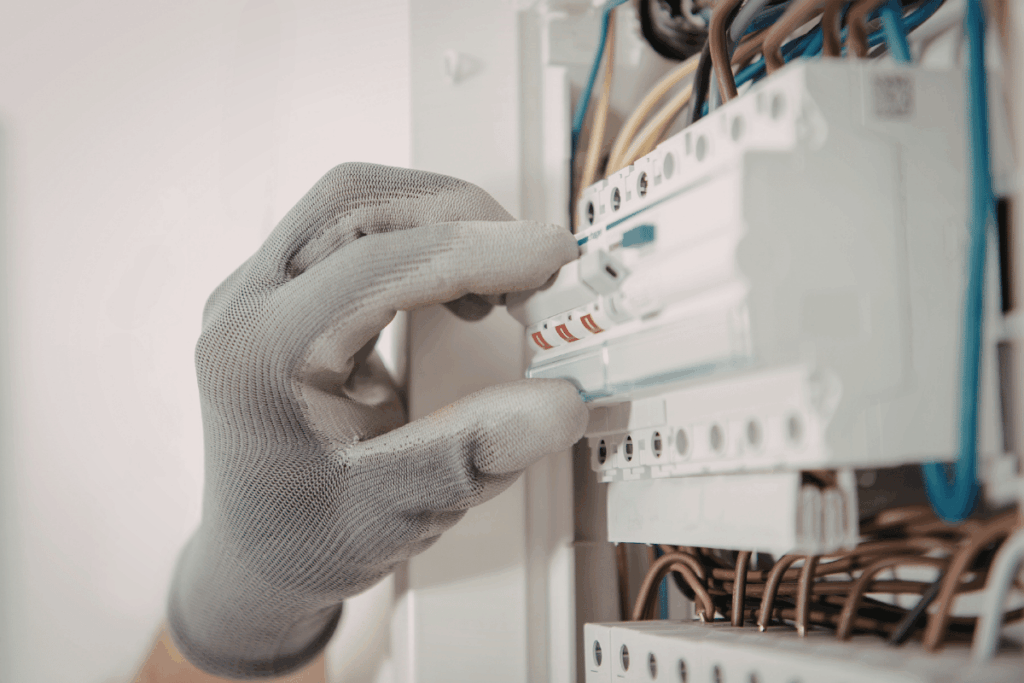
You switch on the air conditioner, hear the outdoor unit start, and a few moments later, everything goes quiet. You check the switchboard and find that the circuit breaker has tripped again.
It’s frustrating, particularly during a Melbourne heatwave when you need the cooling most. But before resetting the breaker, there’s something important to understand: the power may be cutting out because your electrical system has detected a problem.
The cause could be an overloaded circuit, a struggling compressor, moisture in an electrical component or a fault in the home’s wiring. Not every breaker trip means your air conditioner needs replacing, but repeated trips should never be ignored.
At Kelvinaire Climate Control Solutions, we help Melbourne homeowners and businesses investigate air conditioning faults and identify practical repair options.
This guide explains what the timing of a breaker trip can tell you, which problems may be responsible and what you can safely check before arranging a professional inspection.
First, Is It the Circuit Breaker or the Safety Switch?
Before looking at the air conditioner itself, it’s worth checking which protective device has switched off.
Although people often use the terms interchangeably, circuit breakers and safety switches perform different jobs.
A circuit breaker protects electrical wiring against excessive current caused by an overload or short circuit.
A safety switch, also called a residual current device (RCD), detects electrical current leakage that could create an electric shock risk.
Some modern switchboards have combined devices that provide both types of protection.
According to Energy Safe Victoria, circuit breakers and safety switches are designed to protect against different electrical hazards.
Why does this matter?
If the circuit breaker trips, the technician may need to investigate excessive electrical current, wiring faults or problems with the air conditioner’s motors.
If the safety switch trips, the investigation may focus on current leakage, damaged insulation, moisture or faulty electrical components.
You don’t need to diagnose the switchboard yourself. Simply noting which switch has tripped can give the technician a useful starting point.
When Does Your Air Conditioner Trip the Breaker?
One of the most helpful clues is when the power cuts out.
An air conditioner that trips immediately after switching on may have a different problem from one that operates normally for 40 minutes before shutting down.
Here’s what the timing could suggest.
A clogged filter restricts airflow, forcing the compressor to work harder and draw more current than it should. Over time, this extra strain can be enough to trip the breaker, especially on a hot Melbourne afternoon when the system is already working at capacity.
| When the AC trips | Possible causes |
|---|---|
| Immediately when switched on | Short circuit, earth leakage or damaged electrical component |
| When the outdoor unit starts | Compressor, fan motor or starting component fault |
| After 15–60 minutes | Overheating, airflow restriction or an electrical issue that develops under load |
| During very hot weather | High operating load, poor heat rejection or an existing fault becoming more noticeable |
| After heavy rain | Moisture entering damaged wiring, connections or electrical components |
| When another appliance is running | Possible circuit overload, if both appliances share the same circuit |
These patterns are clues, not a diagnosis. Different faults can produce similar symptoms.
If your air conditioner has tripped repeatedly, leave it switched off rather than trying to reproduce the problem.
7 Reasons Your Air Conditioner May Keep Tripping the Breaker
1. The Electrical Circuit Is Overloaded
An overloaded circuit occurs when connected equipment draws more current than the circuit is designed to handle.
For example, a small window air conditioner or portable AC may share a power circuit with other appliances. If a heater, kettle or other high-power device is operating at the same time, the combined electrical load could exceed the circuit’s capacity.
However, many permanently installed split and ducted air conditioning systems have dedicated circuits. In those cases, switching off household appliances may make no difference.
What you might notice:
The breaker trips when several appliances operate together.
The problem started after adding a new electrical appliance.
The air conditioner works intermittently, but the circuit trips under heavier demand.
What should happen next?
A licensed electrician can assess the circuit, its protective device, wiring and connected electrical load.
Never replace a breaker with a higher-rated one simply to stop it tripping. The wiring must be suitable for the protection installed.
2. The Compressor Is Struggling to Start
The compressor is one of the most important components in a refrigerated air conditioning system. It circulates refrigerant and allows the system to transfer heat between indoors and outdoors.
When a compressor develops an electrical or mechanical fault, it may draw unusually high current or fail to start correctly.
You might hear the outdoor unit humming or attempting to start before the power cuts out.
Possible problems include:
Damaged compressor windings
Mechanical resistance inside the compressor
A faulty starting component, where fitted
Electrical supply problems
A compressor that has overheated
Some older and fixed-speed systems use capacitors to help motors start or run. Many modern inverter systems use electronic controls instead, so a capacitor is not automatically the cause.
A useful detail to tell your technician: Does the indoor fan operate normally until the outdoor unit attempts to start?
That information can help narrow down the investigation.
If the compressor is faulty, the next decision isn’t always straightforward. Repair costs, system age, refrigerant type and parts availability should all be considered before deciding whether to repair or replace the unit.
3. Dirty Filters or Blocked Outdoor Airflow Are Affecting Performance
Melbourne’s warmer months can put extra demand on air conditioning systems, especially when they run for long periods.
If the indoor filter is heavily clogged, airflow through the indoor unit may become restricted. This can affect heat transfer and contribute to operating problems.
Likewise, an outdoor condenser surrounded by leaves, accumulated dirt or garden growth may struggle to release heat efficiently.
Depending on the system and operating conditions, restricted heat transfer can contribute to overheating or protective shutdowns.
Important: A dirty filter alone does not necessarily increase electrical current or cause a circuit breaker to trip. If electrical protection is operating, the underlying cause still needs to be investigated.
Homeowners can help maintain airflow by:
Cleaning accessible filters according to the manufacturer’s instructions
Keeping furniture and curtains away from indoor air outlets
Removing loose leaves and vegetation around the outdoor unit
Keeping the outdoor unit’s required clearances unobstructed
Avoid opening electrical covers, spraying water into the unit or reaching into the fan compartment.
If your system hasn’t been maintained recently, a professional air conditioning service in Melbourne can help identify airflow restrictions and other developing faults.
4. Moisture Has Entered an Electrical Component
Has your air conditioner started tripping after heavy rain?
That timing is worth mentioning when you book a service.
Outdoor air conditioning units are designed to withstand normal weather exposure. However, deteriorated seals, damaged cable insulation or compromised electrical enclosures can allow moisture to reach areas where it shouldn’t.
This may result in current leakage or other electrical faults.
Possible warning signs include:
A safety switch tripping after rainfall
Intermittent operation during wet weather
Visible damage to electrical conduit or cable insulation
Corrosion around accessible external components
Moisture-related faults can be difficult to identify because the problem may temporarily disappear as components dry.
Even if the air conditioner starts working again, that doesn’t confirm the fault has been resolved.
A qualified professional should inspect the affected electrical components and carry out appropriate testing.
5. A Fan Motor or Electrical Component Is Failing
Not every electrical fault originates from the compressor.
Air conditioners contain several components that work together, including indoor and outdoor fan motors, control boards, wiring connections and switching devices.
A motor with damaged windings or mechanical resistance may draw excessive current. Damaged wiring or an electrical component with failed insulation may also cause protective devices to operate.
Watch for changes in how the unit sounds or behaves.
For example, a fan that previously ran quietly but now produces unusual grinding or buzzing noises may require inspection.
Similarly, an outdoor unit that stops running while the indoor system continues operating could indicate a fault that needs professional diagnosis.
These symptoms don’t prove a particular component has failed, but they help the technician understand what was happening before the shutdown.
6. Refrigerant or Heat-Transfer Problems Are Putting the System Under Stress
Refrigerant problems can affect compressor operating conditions and system performance.
Low refrigerant caused by a leak, incorrect refrigerant charge or restrictions in the refrigerant circuit may contribute to abnormal temperatures and pressures.
However, refrigerant faults do not always cause breaker trips. Many systems detect abnormal conditions and shut down through their own electronic protection controls.
Signs that may accompany a refrigerant or heat-transfer problem include:
Reduced cooling or heating performance
Ice forming on parts of the indoor coil or refrigerant pipework
The outdoor unit running unusually long
Repeated system error codes
Adding refrigerant without investigating the cause is not a proper long-term solution.
Refrigerant work must be carried out by appropriately authorised personnel.
If your system is displaying a fault code, our guide to Daikin, Mitsubishi, Fujitsu and Samsung air conditioner error codes may help you understand what information to record before booking a repair.
7. The Problem Is in the Switchboard or Electrical Supply
Sometimes the air conditioner is not the source of the fault.
A deteriorating circuit breaker, loose electrical connection, damaged cable or incorrectly configured circuit can cause recurring interruptions.
This is particularly worth investigating if the problem began after electrical work, a switchboard change or a new air conditioning installation.
Older homes may also have electrical installations that require assessment against current equipment demands.
The important distinction is that an air conditioning technician should not assume the AC is faulty without considering the electrical supply.
Depending on the issue, diagnosis may require a licensed electrician to inspect the switchboard, protective devices and fixed wiring.
What Can You Safely Check Before Calling a Technician?
There are a few observations you can make without dismantling equipment or touching electrical components.
1. Check which switch has tripped.
If your switchboard is safely accessible, look at the switch labels without removing any covers.
Record whether the affected device is labelled for air conditioning, a power circuit or an RCD.
If you’re unsure, don’t guess or interfere with the wiring.
2. Think about when the problem started.
Did the first trip happen after a storm, a recent service, electrical work or several days of heavy air conditioner use?
Changes around the time the problem started can help with diagnosis.
3. Inspect the air filter.
If the manufacturer’s instructions allow it, remove and clean the accessible indoor filter while the system is switched off.
This is routine maintenance, not a substitute for investigating an electrical fault.
4. Look around the outdoor unit.
Check for leaves, vegetation or obvious obstructions from a safe distance.
Don’t remove panels or touch damaged cables.
5. Record any error code or unusual sound.
If the system displayed an error before shutting down, write down the code. A photo of the display can also be useful.
Do not restart the system repeatedly to obtain a code.
What about resetting the breaker?
A single reset may be appropriate after an isolated trip when there are no signs of damage, overheating or moisture, and the equipment manufacturer’s instructions permit it.
However, if the breaker trips again, won’t remain on or has already tripped repeatedly, leave it off and arrange professional assistance.
Energy Safe Victoria advises contacting a licensed electrician when circuit breakers or safety switches continue turning off.
When Is a Tripping Air Conditioner an Electrical Emergency?
Some symptoms should be treated as more than a routine air conditioning breakdown.
Stop using the system and seek urgent professional assistance if you notice:
A burning smell from the switchboard, indoor unit or outdoor unit
Smoke, sparks or visible scorching
A switchboard or electrical connection that appears damaged or overheated
Repeated breaker or safety switch trips
Water entering electrical equipment
A suspected electric shock or tingling sensation from equipment
Do not touch damaged equipment, open the switchboard or attempt electrical repairs.
If there is smoke, fire or immediate danger, move to safety and call 000.
For urgent air conditioning faults, Kelvinaire offers 24/7 emergency air conditioning repairs in Melbourne.
Where the issue involves household wiring or switchboard protection, a licensed electrician may also be required.
What Happens During a Professional Air Conditioner Fault Diagnosis?
A proper repair starts by identifying why the electrical protection operated, rather than simply replacing the first component that appears suspicious.
Depending on the symptoms and the type of air conditioning system, an appropriately qualified technician may:
Review the fault history. The technician will ask when the breaker trips, whether the issue is intermittent and whether any error codes have appeared.
Inspect the air conditioning equipment. Accessible components, wiring, fans and connections may be checked for visible deterioration or damage.
Carry out electrical testing. Where authorised and appropriate, testing may include insulation resistance, operating current, supply voltage and relevant motor or component checks.
Check operating conditions. Airflow, heat-transfer performance and refrigerant circuit conditions may be assessed where relevant.
Explain the repair options. Once the fault has been identified, you should understand which component or electrical issue needs attention and what the recommended repair involves.
At Kelvinaire, our air conditioning repair service includes fault diagnosis, an explanation of the findings and repair recommendations.
The aim is to resolve the cause of the trip, not just restore power temporarily.
Should You Repair or Replace an Air Conditioner That Keeps Tripping?
A breaker trip doesn’t automatically mean it’s time for a new air conditioner.
If the problem is an isolated, repairable component fault and the rest of the system is in good condition, repairing it may be the more economical option.
Replacement becomes worth considering when the unit has several significant problems or a major component repair would cost a substantial portion of a new system.
Before deciding, consider:
| Factor | What to consider |
|---|---|
| Age of the unit | An older system may have more wear and less remaining service life |
| Type of fault | A minor electrical component repair differs greatly from compressor replacement |
| Repair history | Repeated breakdowns may indicate broader reliability problems |
| Parts availability | Some older models can be difficult or expensive to repair |
| Energy efficiency | A modern system may provide better running efficiency |
| Installation condition | Existing wiring and installation requirements may affect replacement costs |
For example, replacing a faulty component in an otherwise reliable split system may be worthwhile.
On the other hand, if an ageing ducted system has a failed compressor, recurring electrical issues and expensive replacement parts, it may be sensible to compare repair costs with a new installation.
The decision should be based on an actual diagnosis and written quotation rather than the age of the unit alone.
How Can You Reduce the Risk of Future AC Breaker Trips?
Not every electrical fault is preventable, but regular maintenance can help identify some problems before they become serious.
For Melbourne homes, it’s worth scheduling air conditioning maintenance before the busiest cooling season.
A maintenance visit can help identify dirty coils, restricted airflow, deteriorating components and operating conditions that may contribute to system failure.
Between professional services, homeowners can clean accessible filters, maintain outdoor airflow clearances and pay attention to changes in system performance.
If you notice unusual sounds, recurring error codes or inconsistent cooling, arrange an inspection rather than waiting for a complete breakdown.
Electrical faults can develop without obvious warning, so maintenance cannot guarantee that a breaker will never trip.
Air Conditioning Fault Diagnosis and Repairs Across Melbourne
Kelvinaire Climate Control Solutions provides air conditioning servicing and repairs for residential and commercial systems throughout Melbourne.
Based in Mulgrave, our team works across the southeastern and bayside suburbs, helping customers investigate faults in split systems, ducted air conditioning and other heating and cooling equipment.
We service locations including:
You can also explore our Melbourne air conditioning service areas.
Whether your system trips when starting, stops after running for a while or has developed an intermittent electrical problem, identifying the cause is the first step towards a reliable repair.
Frequently Asked Questions
Why does my air conditioner trip the breaker after 30 minutes?
A delayed trip can occur when a fault develops under operating load or as a component heats up. Possible causes include motor problems, abnormal compressor operating conditions or electrical connections that need inspection. The timing helps with diagnosis but does not identify the exact fault.
Can a dirty air filter cause the circuit breaker to trip?
A heavily blocked filter can affect airflow and system performance. However, it doesn’t automatically cause excessive electrical current. If a breaker trips, an electrical fault or other underlying issue must still be investigated.
Why does my AC trip the safety switch when it rains?
Moisture entering damaged electrical components, wiring or connections may cause current leakage that activates the safety switch. Stop using the system and arrange an inspection. Do not assume the problem has disappeared simply because the unit works again after drying.
Is it safe to keep resetting the air conditioner circuit breaker?
No. Repeatedly resetting a breaker without identifying the fault can expose equipment and occupants to electrical hazards. If the breaker trips again after a reset, leave it off and contact a qualified professional.
Can a faulty compressor cause an AC breaker to trip?
Yes. Certain compressor faults can cause excessive current draw, short circuits or current leakage. However, similar symptoms can come from other components, so electrical testing is needed before confirming compressor failure.
Do I need an electrician or an air conditioning technician?
It depends on where the fault is located. Air conditioning technicians with the appropriate qualifications can investigate relevant system faults, while work on household wiring, switchboards and electrical protection devices requires a licensed electrician. Some problems need both.
How much does it cost to fix an AC that keeps tripping the breaker?
The cost depends on the fault, the system type and whether electrical installation work is required. Cleaning and servicing, replacing a failed component and repairing a compressor involve very different costs. A professional diagnosis is the most reliable way to obtain an accurate quotation.
Get Your Air Conditioner Checked Before the Problem Gets Worse
If your air conditioner keeps tripping the breaker, the safest approach is to stop using it until the cause has been identified.
The fault might be relatively straightforward to repair, or it could involve an electrical problem that needs immediate attention. Either way, repeated resets aren’t a long-term solution.
Kelvinaire Climate Control Solutions provides air conditioning fault diagnosis, servicing and repairs across Melbourne, with 24/7 emergency assistance available for urgent breakdowns.
Need help with an air conditioner that keeps cutting out?
Book an air conditioning inspection or contact Kelvinaire to discuss the problem and arrange the next steps.

