
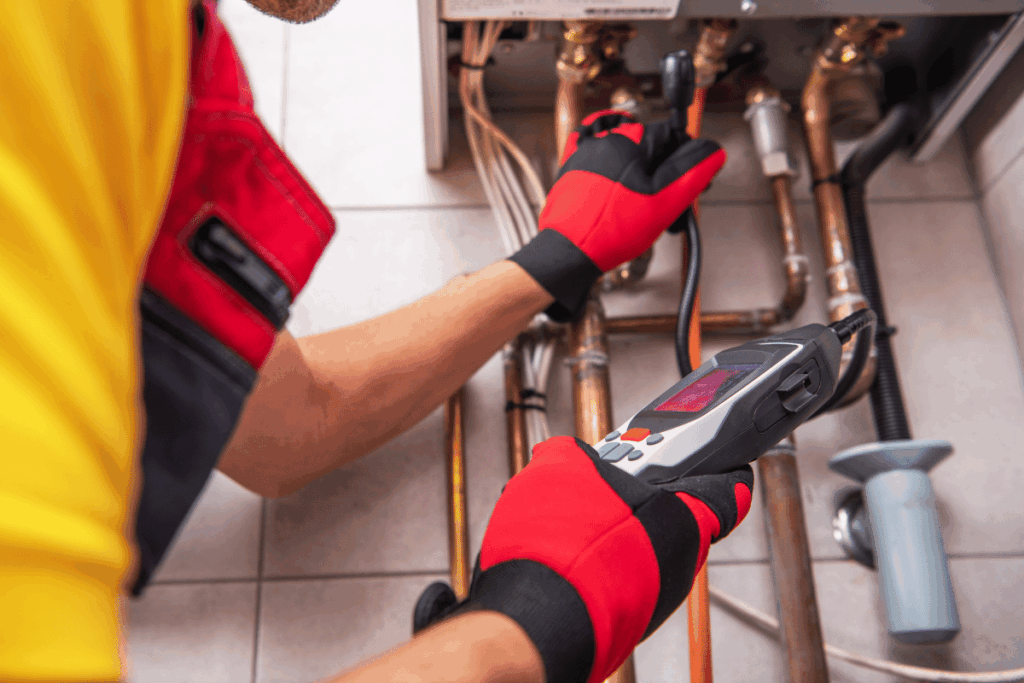
Nothing ruins a Melbourne morning like turning on the tap and getting a blast of cold water. Before you panic and book an emergency call out, there are a few simple checks most homeowners can safely do themselves. In many cases, the fix is a flat pilot light, a tripped switch, or a thermostat that has drifted out of range, not a failed unit.
This guide walks you through the three most common culprits: the pilot light, the thermostat, and the pressure relief valve, so you know what to check, what is safe to touch, and when it is time to stop and call a licensed plumber.
Safety First
Hot water systems involve gas, electricity, and pressurised water, so a few ground rules apply before you start.
- Never attempt to repair a gas connection, electrical wiring, or the pressure relief valve yourself. In Victoria, this type of work legally has to be carried out by a licensed plumber or gasfitter.
- If you smell gas at any point, turn off the gas supply at the meter, do not operate any switches, leave the property, and call your gas distributor’s emergency line immediately.
- Let the system cool down before touching any pipework. Hot water systems can hold water well above 60°C.
For guidance on gas appliance safety in the home, Energy Safe Victoria has straightforward advice on recognising a gas leak and knowing when an appliance needs a licensed professional.
1. Check the Pilot Light
If you have a gas hot water system, a pilot light that has gone out is one of the most common reasons for no hot water.
What to check:
- Look through the small viewing window on the front of the unit. If there is no small blue flame visible, the pilot light is likely out.
- Check that the gas supply valve, usually near the unit or at the meter, is turned to the “on” position.
- Look for a relight instruction label on the unit itself. Most continuous flow and storage units have step by step relighting instructions printed on the casing.
- If the pilot light relights but will not stay lit, this often points to a faulty thermocouple, a part that senses the flame and keeps the gas valve open. This is not a DIY fix.
When to stop: if you cannot relight the pilot following the manufacturer’s instructions, if it keeps going out, or if you smell gas at any stage, stop and call a licensed technician. Only licensed gasfitters are permitted to work on gas lines and components in Victoria, a requirement set out by the Victorian Building Authority.
2. Check the Thermostat
Electric storage and heat pump systems rely on a thermostat to control water temperature. If the thermostat has been bumped, reset, or has simply failed, the system may stop heating altogether or only deliver lukewarm water.
What to check:
- Locate the thermostat dial or digital display, usually on the side of the unit or behind an access panel.
- Confirm it is set to a reasonable temperature, generally between 50°C and 60°C for stored hot water.
- Check the circuit breaker or switchboard for a tripped switch. Electric hot water systems are usually on their own dedicated circuit, so a trip here will cut power to the unit without affecting the rest of the house.
- Check for an off peak or controlled load timer. Some systems only heat during set hours, so if the timer has been knocked out of sync, you may be waiting outside the heating window.
When to stop: if the breaker keeps tripping when reset, if the thermostat display is faulty, or if you need to open the unit’s electrical panel, this is a job for a licensed professional. Faulty elements and thermostats can be a shock hazard if handled incorrectly.
3. Check the Pressure Relief Valve
The pressure relief valve, usually referred to as the PRV or TPR valve, is a safety device that releases pressure and temperature if they build up beyond safe limits. It is normally found on the top or side of the tank with a small lever or trip handle and a drain pipe running to the ground.
What to check:
- Look for visible water pooling under the unit or constant dripping from the valve’s drain pipe. A small amount of dripping after the valve is tested is normal, but continuous dripping is not.
- If the valve appears to be stuck or has not been tested in a while, this is often listed in the manufacturer’s manual as a routine six monthly check, lifting the lever briefly to let a small amount of water discharge.
- Do not attempt to replace, tighten, or dismantle the valve yourself. It is a safety-critical component, and incorrect handling can lead to dangerous pressure build-up or scalding.
When to stop: any sign of constant leaking, corrosion, or a valve that will not reset after testing means the system needs a professional inspection. A stuck or faulty PRV is one of the more serious hot water faults and should not be left unattended.
Other Quick Checks Before You Call
- Power supply: confirm the unit is actually switched on at the isolation switch, which is sometimes separate from the main switchboard.
- Gas supply to the whole house: if other gas appliances have also stopped working, the issue may be with the gas supply itself rather than the hot water unit.
- Age of the system: most hot water systems last 8 to 12 years. If yours is approaching or past this age and faults are becoming frequent, a changeover may be more cost effective than ongoing repairs.
- Unusual noises or smells: rumbling, popping, or a rotten egg smell near a gas unit are signs to stop troubleshooting and call a professional straight away.
When It Is Time to Call a Licensed Plumber
If you have worked through the checks above and still have no hot water, or if any step pointed to gas, electrical, or pressure relief valve work, it is time to bring in a licensed plumber. Trying to push further on these components yourself is not just risky, it is also not legal in Victoria for anything involving gas fitting or the pressure relief valve.
The Kelvinaire team diagnoses the fault first, checking the heating element, thermostat, pressure relief valve, anode rod, and connections, before recommending a repair or a full hot water system changeover. Most jobs are completed on the same visit, with a free quote and no surprise costs.
Local Hot Water Repairs Across Melbourne
Kelvinaire’s technicians carry out hot water system repairs and changeovers across Melbourne’s bayside and south-east suburbs, including fast response for hot water repairs in Bentleigh, hot water system changeovers in Brighton, and emergency hot water callouts in Mount Waverley. The team is based locally in Mulgrave and also services Oakleigh, Clayton, Carnegie, Caulfield, and the surrounding Glen Eira, Kingston, Bayside, and Monash council areas.
If you are unsure whether your suburb is covered, get in touch for a free quote and the team will confirm availability and same-day options.
Frequently Asked Questions
Why has my gas hot water system lost its pilot light?
A draught, a dirty pilot assembly, or a faulty thermocouple can all cause the pilot to go out. If it will not stay lit after following the relight instructions, the thermocouple or gas valve likely needs replacing by a licensed gasfitter.
Why is my electric hot water only lukewarm?
This is often a thermostat set too low, a partially failed heating element, or an off peak timer limiting when the system heats. A technician can test the element and thermostat to confirm which one is at fault.
Is it normal for the pressure relief valve to drip?
A small amount of dripping after testing the valve is normal. Constant or heavy dripping is not, and usually means the valve needs replacing.
How much does a hot water system changeover cost in Melbourne?
Costs vary depending on the system type, electric storage, heat pump, or solar, and whether existing pipework and electrical or gas connections can be reused. Kelvinaire provides a free, no obligation quote before any work begins.
Should I repair or replace my hot water system?
If the unit is under eight years old and the fault is isolated, such as a thermocouple or element, a repair is usually the better option. For older systems with repeated faults, a changeover is often more cost effective long term.
Get a Free Quote Today
If these checks have not solved the problem, the Kelvinaire team can help. Call 0435 466 295 or request a free quote online for fast, same-day hot water repairs and changeovers across Melbourne.

