
Heating water uses somewhere between 15% and 30% of a typical household’s energy. So when your old hot water system starts leaking, or the gas rules change, the system you choose will show up on your bills for the next decade.
For most Melbourne households the choice comes down to three options: an electric heat pump, a gas system or solar hot water. Here is how they compare on running costs and upfront costs, which homes each one suits, and how Victorian rebates change the numbers.
The short version: For most Melbourne homes, a heat pump is the best all-rounder. It is far cheaper to run than gas, cheaper to buy than solar, and eligible for generous rebates. Solar hot water can win on running costs if you have a good roof and a big household. Gas is the hardest to justify, especially with new rules starting on 1 March 2027.
How the Three Systems Work
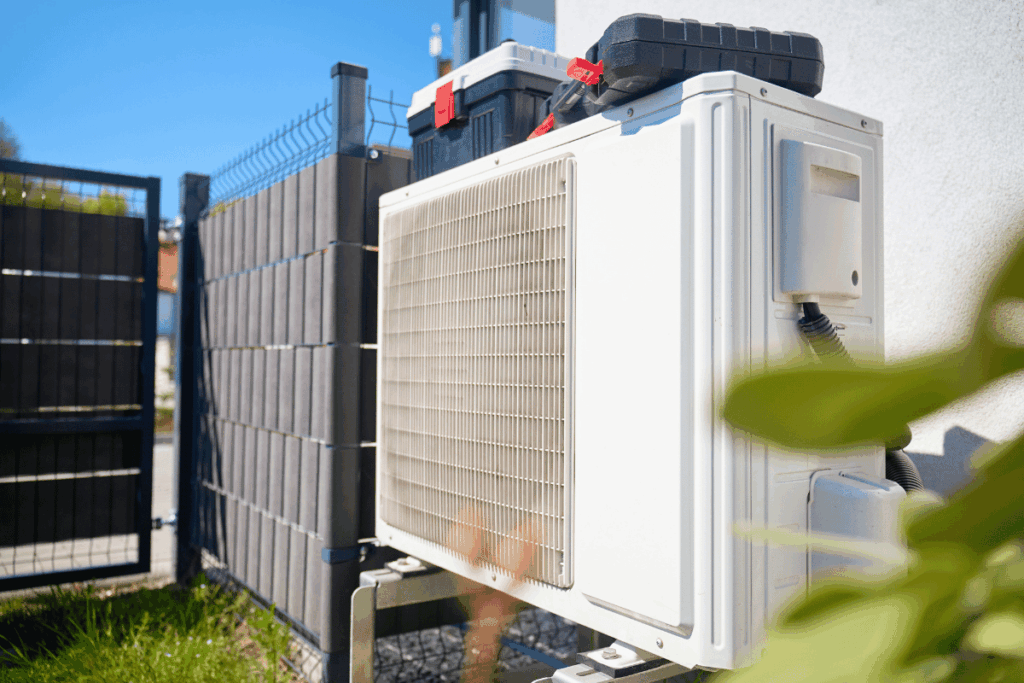
Heat pump: It works like a fridge in reverse, pulling heat from the outside air into a storage tank. It uses up to 75% less electricity than a standard electric storage system and is designed to perform well in cool climates like Victoria’s.
Gas: A storage system heats a tank and keeps it hot, while an instantaneous (continuous flow) system heats water only when you turn on the tap.
Solar hot water: Roof collectors heat water that is stored in a tank. A gas or electric booster steps in on cloudy days and in winter.
Running costs: What Melbourne Households Can Expect
Sustainability Victoria has modelled annual running costs for a typical Melbourne home. The figures below are for standard versions of each system and use gas prices from mid-2024. Energy prices move, so treat them as a guide and check them against your own bills.
Two-person household (about 90 litres a day)
- Heat pump: about $295 a year on a standard tariff, or $205 with rooftop solar
- Solar hot water: about $170 (gas boosted) or $190 (electric boosted, off-peak)
- Gas instantaneous: about $400
- Gas storage: about $575
Four-person household (about 150 litres a day)
- Heat pump: about $435 a year on a standard tariff, or $300 with rooftop solar
- Solar hot water: about $305 (gas boosted) or $335 (electric boosted, off-peak)
- Gas instantaneous: about $655
- Gas storage: about $780
- For reference, a standard electric storage tank on a peak tariff: about $1,015
A heat pump costs roughly half as much to run as a gas storage system. Solar hot water is the cheapest overall, but in these models it beats a heat pump by only about $100 to $130 a year. The Victorian Government estimates that switching from gas to an efficient electric system saves around $400 a year.
Upfront Costs
CHOICE publishes these indicative product prices, which exclude installation and rebates:
- Electric heat pump: $2,200 to $6,800
- Gas storage: $1,000 to $7,000
- Gas instantaneous: $700 to $3,000
- Solar hot water: $4,000 to $8,000
Your final quote will be higher once installation and any electrical or plumbing work are added. Gas looks cheapest at the entry level, particularly instantaneous units. Rebates change that picture.
Victorian Rebates that Shrink the Price
Two state programs apply to heat pumps and solar hot water, and you can often use both together.
1. Solar Homes hot water rebate. The Solar Victoria hot water rebate covers 50% of the purchase price, up to $1,000, or up to $1,400 for an eligible locally made product. To qualify you generally need to:
- be an owner-occupier
- have a combined household taxable income under $150,000
- own a property valued under $3 million
- be replacing a system that is at least 3 years old
- use an authorised retailer and an eligible product
The rebate comes off your invoice, so you pay only the balance after installation. It is released in rounds, so check availability before you plan around it.
2. Victorian Energy Upgrades (VEU) discount. The VEU hot water system discounts are indicative amounts of $560 for replacing gas with a heat pump, $700 for gas to solar-boosted, $630 for electric to heat pump and $910 for electric to solar-boosted. Private rentals are eligible, and the product needs at least a 5-year warranty.
Combined, the Victorian Government says households can save up to $1,560, or up to $1,960 with a locally made product. Your installer will also normally factor in federal Small-scale Technology Certificates (STCs).
An illustrative example: Say a like-for-like gas replacement is quoted at $2,500 installed and a heat pump at $4,000. The $1,500 premium could be more than covered by up to $1,560 in rebates. You would then also save on running costs every year. Your own quotes and eligibility will differ.
If your system fails suddenly, you do not have to wait for rebate approval before installing. You do need to use an authorised retailer and an eligible product, and to tell them you intend to apply.
The 1 March 2027 Gas Rule
From 1 March 2027, if a gas hot water appliance in an existing Victorian home breaks and cannot be repaired, it must be replaced with an electric alternative in most cases. That is only about five months away. Hot water systems typically last 8 to 10 years, so if your gas unit is approaching that age, plan the replacement now rather than in a scramble after it fails.
Which system suits which Melbourne home
- Family home with an old electric or gas storage tank (3 to 5 people): A heat pump is usually the strongest choice. It offers the biggest running-cost saving and full access to both rebates.
- Home with rooftop solar panels: A heat pump on a timer can run on your own midday solar. In the four-person model above, that drops the running cost from about $435 to $300 a year.
- Large household with an unshaded, north-facing roof: Solar hot water can deliver the lowest bills, but it has the highest upfront price. A gas booster also keeps you tied to a gas connection. Keep an eye on the system, because if the collectors fail the booster quietly picks up the load and your bills climb.
- Terrace, townhouse or apartment with limited space: Space is the main constraint. A heat pump’s compressor can be installed separately from the tank, so ask your installer about a split arrangement. Even for a one-person household, the modelled heat pump cost of about $205 a year edges out instantaneous gas at about $235.
- Renters and landlords: VEU discounts apply to private rentals, but the Solar Homes rebate is for owner-occupiers, so talk to your landlord or agent.
- Higher-income households or higher-value properties: You may miss the Solar Homes rebate, but VEU discounts can still apply.
Paying for the Upgrade
Even after rebates, a new system can mean a few thousand dollars at short notice. Because the Solar Homes rebate is deducted from your invoice, the amount you need to fund is the net balance.
If you would rather spread that cost than drain your savings, a personal loan can help. Millard Financial arranges secured and unsecured personal loans for home improvements through a panel of Australian lenders, for clients across Australia.
Unsecured loans generally start at $5,000, so this option tends to suit households bundling a hot water upgrade with other work such as solar panels, insulation or a new split system. If the upgrade is one of several bills competing for your cash flow, debt consolidation may help you combine them into a single repayment. You can also browse our personal finance options. All loans are subject to lender criteria and approval.
Frequently Asked Questions
How much does a heat pump hot water system cost in Melbourne?
Indicative product prices run from about $2,200 to $6,800 before installation. Eligible households can then take up to $1,560 off through combined Victorian rebates, or up to $1,960 with a locally made product.
Do heat pumps work in Melbourne winters?
Yes. Modern heat pump systems are designed to operate efficiently in cooler temperatures and suit Victoria’s climate.
Can I still replace my gas hot water system with gas?
The new rule applies from 1 March 2027, when a gas system that breaks beyond repair must generally be replaced with an electric alternative. Even if you can still choose gas before then, you would likely be buying a system that costs more to run for years to come.
Can renters get a hot water rebate?
VEU discounts are available for private rentals. The Solar Homes rebate is only for owner-occupiers.
Ready to Plan Your Upgrade?
Choosing between a heat pump, gas and solar hot water comes down to your household size, roof, budget and existing system. Get quotes from at least two authorised retailers, check your rebate eligibility early, and line up your funding before you sign.
If you would like to talk through financing options, get in touch with the Millard Financial team.
General information only. Figures are indicative, based on publicly available Victorian Government, Sustainability Victoria and CHOICE data as at September 2026, and rebate rules can change. This article is not financial, credit, energy or tax advice. Your full financial situation would need to be reviewed prior to acceptance of any offer or product.

